
Food Market
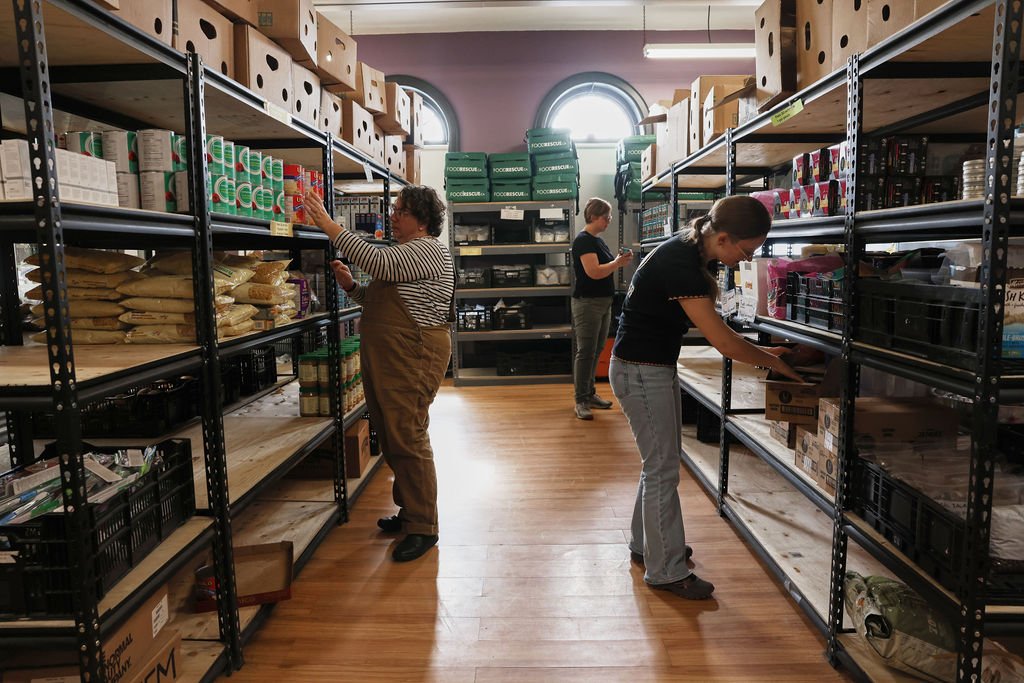
The Food Market is a welcoming, no-cost, choice-based pantry open to both working and non-working individuals and other families who need a helping hand.
Community members are free to shop the market for food and other items while receiving guidance from our volunteers on how to make the most of their budget, and receive ideas on nutritious and delicious recipes. You can find some of these recipes using the button below.
The Hope House Food Market is here to ensure that everyone in Guelph can provide their family with nutritious meals and household necessities.
No one in our community should have to choose between healthy food, a clean home, or necessary hygiene products. Unfortunately, that is often the reality for families living with less.
The Food Market is open:
Monday: 9:30am – 3:30pm
Tuesday: 9:30am – 3:30pm
Wednesday: 9:30am – 3:30pm
Thursday: 9:30am – 5:30pm




Our Sponsors:



Givers of Hope for the Food Market
Food Market Tour
Come take a tour of our market.
Food & Hygiene Resources
-
Most people confuse the terms "expiry date" and "best before date." This confusion continues to be a major source of avoidable food waste in Canada. Only five foods should not be consumed past the expiry date: infant formula, meal replacements, formulated liquid diets (medical), very low-energy foods (medical), and nutritional supplements. Everything else is edible after the best before date has passed. Always use your senses to evaluate food quality if food is past the best before date.
While food may be edible past the best before date, non-profits cannot always use this type of food. Please try to donate food as fresh as possible.
-
Guelph Food Bank (GFB) was established by Spiritwind Christian Centre in 1989 to accomplish one major goal: To help those in our community who are in need of food support while encouraging them to become self-sufficient by supporting them with our various life skills programs.
-
CLICK HERE to see the Guelph Food Access Guide!
-
Food Equity with Dignity: Local Chef, Yasi Zorlutuna is Creating a Mobile Solution addressing Food Insecurity and Food Waste, and Bringing Affordable Food to Your Neighbourhood with the Community FEWD Truck
In partnership with GNSC and with support from Our Food Future, local chef, Yasi Zorlutuna is bringing her long-held dream of a Community Food Truck that takes pre-consumer food waste – high-quality fresh produce and food items that are destined for landfill for a variety of reasons, including aesthetic, lack of space to properly store and process, etc. – and uses it as the resource it is with Community FEWD.
LEARN MORE HERE!
-
Here is a map to all locations.
Period Pin is working away to make it easy for menstruators to find the free products they need, when they need them. We appreciate the support from libraries, museums community-based organizations, and some private businesses – all committed to providing free menstrual products. And many others sharing the map with menstruators within their communities they serve.
-
18% of households in our community are food insecure, while 1 in 4 children in Ontario are food insecure. Food insecurity likely affects someone you know. It can look like worrying daily about being able to buy food, skipping meals, eating too little or not being able to afford healthy options. High living costs, unexpected expenses, illness or job loss can put any of us at risk. Learn more here.
Scroll down to learn more about Food Insecurity and Guelph.
OAKTREE PROJECT 9
Food Insecurity is a Community Crisis
Our community is facing a food insecurity crisis. Oak Tree 9 will help educate, support, and raise awareness about the amazing work Guelph/Wellington charities do to help people in our community access the nutritious food they need to thrive. Guided by a panel of expert community judges who understand the social, economic and logistical challenges involved, we are inviting local charities to submit applications for our $20,000 grand prize. The money can be used to expand or create programming that will get healthy and nutritious food to those who need it. See the Hope House video!
Food Insecurity
Every day in Canada, nearly 1 in 4 people worry about eating, compromise on the quantity and quality of their groceries and/or go without food due to financial constraints.
Food insecurity disproportionately impacts some groups, including Indigenous and racialized peoples, people with disabilities, immigrants, renters, and single people aged 18 to 64 who are living alone.
By the time people report experiencing food insecurity, they already have issues meeting their basic needs: from paying rent to buying prescription medication.
Food insecurity is a Canada-wide problem and an issue in every community—including yours.
In every community in Canada, poverty is the root cause of food insecurity. In this profile, we've compiled key stats about poverty and food insecurity in your federal riding.
We've highlighted the population groups that are most affected by poverty. We've also included data about income and housing affordability. Why? Because people living with poverty are more likely to earn low incomes, face challenges in paying rent and compromise on buying food.
We encourage you to use this tool to raise awareness and call on the federal government to provide better income supports to address poverty and food insecurity.
